 Skip to content

Marine & Shark Conservation
South Africa
Dive into hands-on shark conservation and marine research in South Africa’s premier dive destination.
Overview
Duration
2-4 Weeks
Minimum Age
18+
Start Dates
1st & 3rd Monday of every month
Fees From
$2,449 USD
UN SDGs
This program directly supports SDG 14: Life Below Water by protecting sharks, monitoring coral reefs, and advancing marine conservation research in the iSimangaliso MPA. It also contributes to SDG 4: Quality Education and SDG 13: Climate Action through environmental workshops, data-driven research, and community outreach. Together, these efforts align with SDG 17: Partnerships for the Goals, connecting international interns, local scientists, and conservation partners in a shared mission to safeguard marine ecosystems and empower coastal communities.
What You'll Be Doing
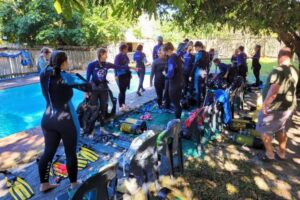
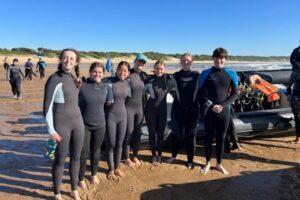
As a Marine & Shark Conservation volunteer, you’ll gain first-hand experience in fieldwork, snorkelling, and reef monitoring. Each day blends structured training with practical conservation activities, ensuring that even complete beginners can take part confidently.
You will be:
- Taking part in CoralWatch surveys to record coral health and reef condition.
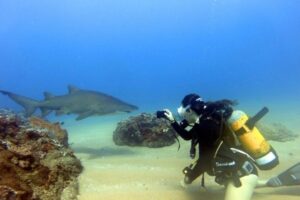
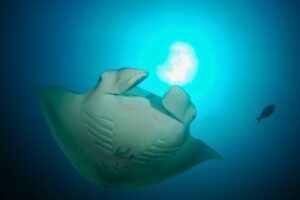
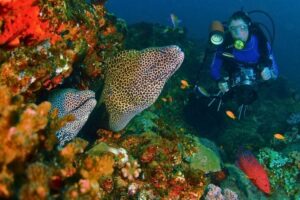
- Joining marine life sightings and observation sessions to document turtles, rays, and reef fish.
- Assisting with beach clean-ups, debris sorting, and environmental awareness initiatives.
- Supporting simple fish and invertebrate counts under staff supervision.
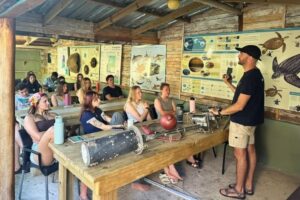
- Learning about reef ecology, conservation ethics, and the role of Marine Protected Areas.
These activities are fully guided, giving you a foundation in ocean research and conservation fieldwork.
Why It Matters
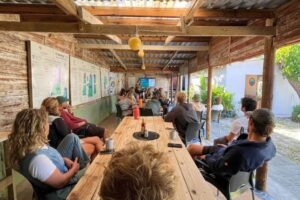
Coral reefs are the lifeblood of marine ecosystems, supporting a quarter of all ocean species, yet they are increasingly under threat. By joining this program, you’ll help protect these fragile habitats while learning how science, data, and community awareness come together to drive conservation. By collecting data, conducting surveys, and analysing results, you’ll contribute to real research shaping conservation decisions in the iSimangaliso Marine Protected Area. Your work helps protect sharks, restore coral reefs, and strengthen the link between local communities and the ocean they depend on.
A Day in the Life
Every day is different, but a typical schedule might look like this:
- Morning: Begin with a safety briefing and prepare for a snorkelling or reef-monitoring session. Record coral health and marine life sightings under the guidance of the field team.
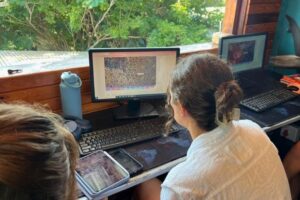
- Afternoon: Help with data entry, equipment prep, or environmental clean-ups along the shoreline.
- Evening: Share a meal with fellow volunteers, review the day’s findings, and enjoy downtime together at the field station.
Weekends often include cultural excursions, beach days, or exploring the stunning natural beauty of northern KwaZulu-Natal.
Your Impact
Every task you complete directly supports the ongoing conservation work at the field station. Volunteers play an important role in:
- Contributing real data to coral-health and reef-monitoring initiatives.
- Reducing marine debris and pollution through clean-up efforts.
- Raising awareness about marine conservation and sustainability.
- Supporting responsible research practices within a protected area.
By the end of your placement, you’ll not only have new knowledge and skills, you’ll have made a measurable contribution to the protection of one of the most biodiverse marine environments in the Indian Ocean.
Where You'll Be Staying
You’ll be based in Sodwana Bay, part of the iSimangaliso Wetland Park in northern KwaZulu-Natal, South Africa’s premier dive destination and a hotspot for marine biodiversity. Surrounded by coastal forests, pristine beaches, and vibrant reefs, this region offers an incredible backdrop for both learning and exploration.
The field station sits just a short distance from the shoreline, with easy access to the water for daily marine activities. Between conservation sessions, you can relax in the warm coastal climate, watch the sunset over the dunes, or explore the nearby village for local food and culture.
Accommodation & Meals
You will stay in a private room within shared volunteer accommodation at the filed station. Facilities include Wi-Fi, shared bathrooms, laundry, and a fully equipped kitchen. The environment is relaxed, social, and conservation-focused, with volunteers often cooking and eating together after a day in the field.
Meals are self-catered, with regular town trips for grocery shopping and a restaurant located just across the road. A weekly food budget of USD $50–$100 is recommended. The setup encourages independence while ensuring all the essentials are easily accessible.
Who Can Join
This program is open to anyone aged 18 or older with a passion for the ocean and a willingness to learn. You don’t need any prior diving or research experience, just basic swimming ability, good general health, and enthusiasm for conservation.
It’s ideal for:
- Gap-year travellers and early-career students seeking field experience.
- Ocean lovers looking for a meaningful way to volunteer abroad.
- Professionals on a career break who want to reconnect with nature and contribute to sustainability.
Program Pricing
Your program fees directly support the operations of our local team in South Africa and the services we provide to ensure your experience is meaningful, safe, and well-supported.
Outreach Overseas Offer
- Pre-departure support
- Volunteer information pack
- Assistance with trip logistics
- Emergency assistance
- Program quality assurance
- Certificate of participation
What's Included
- Shared accommodation
- Airport transfers
- Project transport and coordination
- On-site orientation and training
- PADI Open Water or Advanced Open Water course
- Dive gear rental
- Boat-based expeditions
- Wi-Fi
What's Excluded
- Flights
- Travel & health insurance
- Visa fees
- Background check (if required)
- Personal spending money
- Excursions
- PADI/SSI or freediving courses
All program fees exclude a one-time non-refundable $199 confirmation fee, which is payable upon acceptance into the program. Your remaining balance (program fees and any optional add-ons) is only due 60 days before your start date. This can be paid in instalments or as a lump sum.
| Duration | Program Fee |
|---|---|
| 2 Weeks | $2,250 |
| 4 Weeks | $3,170 |
Diving Courses
While this program includes an Open Water or Advanced Open Water course, you can take you dive expereince to the next level by gaining further certifications by adding a PADI, SSI, or Pure Apnea course. All include full instruction, gear, and certification.
- Freediver Level 1 – $230 (2 days) Basics of freediving (5–10 m) and safety.
- Freediver Level 2 – $300 (3 days) Advanced freediving (15–20 m).
- Scuba Refresher – $30 (4 hrs) Quick review for divers inactive 6+ months.
- Open Water Diver – $425 (4 days) Entry-level certification (18 m).
- Advanced Open Water – $400 (3 days) Depth to 30 m with 5 dives.
- Rescue Diver – $400 (4 days) Emergency management (EFR + $165 required).
Ready to Make a Real Impact?
If you’ve ever dreamed of helping protect coral reefs, sea turtles, and tropical fish while experiencing South Africa’s stunning coastline, this is your chance. Join the Marine & Shark Conservation Volunteer Program in Sodwana Bay to gain hands-on field experience, meet like-minded volunteers, and contribute to meaningful marine conservation.
Choose your next step:
Apply Now to start your application and secure your spot in the program.
Enquire Here to get all the details you need from our team before you commit.
Good to Know Before You Go
What date should I arrive, and how do I get to the program location?
Fly into Richards Bay Airport (RCB). Group airport pick-ups take place twice a month to align with the program’s start dates on the 1st and 3rd Monday of each month. Please book your flight to arrive by 13:00 on your start day and schedule your return flight after 11:00 on your final day.
International volunteers typically fly into Johannesburg (O.R. Tambo International Airport – JNB) and then take a short domestic flight to Richards Bay. You’ll be met at the airport by a local team representative and transferred to the field station in Sodwana Bay.
What is the accommodation like and who will I be staying with?
You’ll stay in private rooms within shared volunteer accommodation at the field station, located near the beach in Sodwana Bay. Facilities include Wi-Fi, shared bathrooms, laundry, and a fully equipped kitchen. Meals are self-catered, and volunteers have regular town runs for groceries. A restaurant is also just across the road. The setup encourages social connection while giving you personal space for research and downtime.
What does a typical volunteer week look like?
Expect a mix of boat trips, scuba surveys, workshops, and data sessions. You’ll spend 2–3 days at sea, 1–2 days in analysis or training, and weekends free for rest or exploration.
Are there any requirements to join this program?
Marine science students, graduates, or anyone aged 18–35 with a passion for conservation. Intermediate English, basic swimming ability and good general health is required. Diving experience is an advantage but not essential.
Is it safe to volunteer and travel in South Africa?
Yes. The field team provides full orientation and safety briefings when you arrive. Sodwana Bay is a small, friendly coastal community with reliable local services and easy access to medical care in nearby towns. All conservation activities are supervised, and the team is available 24/7 to ensure your safety and wellbeing.
What vaccinations or health precautions should I take?
While there are no mandatory vaccinations required to enter South Africa or participate in the program, we recommend consulting your doctor or travel clinic before travelling. Common vaccines for South Africa include:
- Hepatitis A and B
- Tetanus
- Typhoid (optional, depending on travel plans)
No COVID-19 or yellow fever vaccines are required unless you’re arriving from a country with a risk of yellow fever. KwaZulu-Natal is a mild malaria area, therefore, prophylaxis is advised.
Can I join with a friend, family member or partner?
Absolutely! Friends, couples, or groups are welcome to apply together. Shared or neighbouring rooms can be arranged on request, and conservation activities are collaborative, so you’ll spend plenty of time together in the field. Even solo travellers find it easy to make new friends thanks to the shared living environment and team atmosphere.
How much does it cost and what's included?
Program fees start from $2,449 for 2 weeks, including all essential program costs and the one-time non-refundable $199 Outreach Overseas confirmation deposit. Outreach Overseas keeps costs low by partnering directly with grassroots organisations and operating as a small, purpose-driven team. Our pricing supports both volunteers and the project on the ground.
Your fee includes:
- Accommodation
- Field training
- Research trips
- Airport transfers
- Dive gear rental
- Project transport and coordination
- Full support from our local team and Outreach Overseas
Not included: flights, insurance, visa (if applicable), airport transfers, weekend excursions, personal spending money, and meals (self-catered – budget $50–$100 per week).
Will I have time to travel or explore during my stay?
Yes! Weekends are free for independent travel or optional activities. Most volunteers explore iSimangaliso Wetland Park, go scuba diving, or visit nearby game reserves to spot wildlife. The region also offers local markets, beach cafés, and breathtaking coastal scenery.
When is the best time of year to join this program?
This program runs year-round, and each season offers something unique:
-
Nov–Feb: Turtle nesting season and warmest ocean temperatures.
-
Mar–Aug: Peak visibility for reef monitoring and coral surveys.
-
Sep–Oct: Humpback whale migration season.
Whenever you come, you’ll experience Sodwana Bay’s rich biodiversity and play an active role in protecting its marine ecosystems.
How to Apply
Step 1: Choose Your Program
Explore our programs and find the one that fits your passion and goals.
Step 2: Submit an Application
Complete our quick and easy online application form to start the process.
Step 3: Confirm Your Spot
Pay your $199 confirmation deposit upon your acceptance.
Step 4: Make an Impact
Travel to your destination, join your team, and begin your volunteer journey.
Explore Similar Volunteer Opportunities
Elephant Conservation & Research
- 1-12 Weeks
- 18+
- $674 USD
Turtle Conservation
- 1-12 Weeks
- 18+
- $619 USD
Marine Conservation
- 4-12 Weeks
- 18+
- $2,274 USD
Stay in the Loop
Want to know when new destinations and programs launch? Sign up for updates and be the first to hear about our opportunities to travel with purpose.